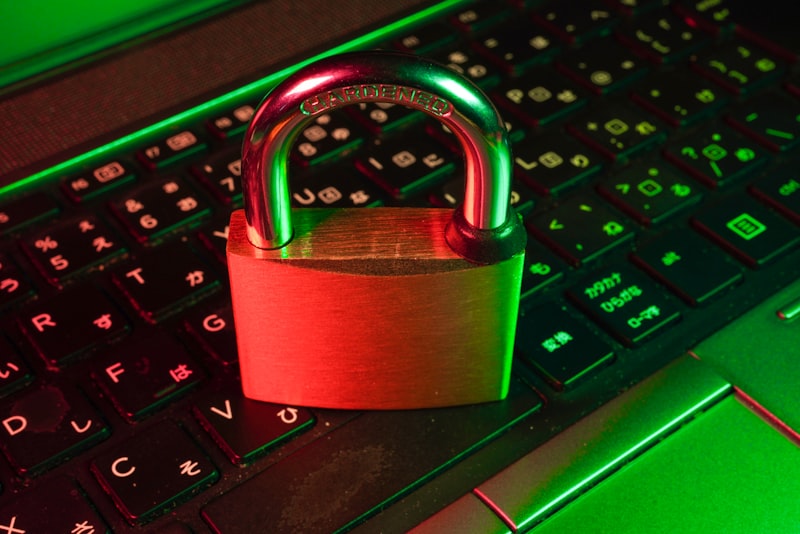
When people hear that Legati uses AES-256-GCM encryption, the name can sound technical and distant. The practical meaning is simple: your files are locked with a type of encryption that cannot be realistically forced open by guessing the key.
There is no honest security system that should promise magic. Passwords still matter. Devices still matter. Account protection still matters. But the encryption itself is not the weak link. AES-256 is designed so that guessing every possible key is so far beyond real-world computing power that it is treated as practically impossible.
What AES-256 Means
AES stands for Advanced Encryption Standard. It is a public, heavily studied encryption standard selected by the US National Institute of Standards and Technology and used around the world to protect sensitive information.
The 256 part means the key is 256 bits long. A key is like the exact combination to a lock. The longer the key, the more possible combinations an attacker would have to try.
With AES-256, the number of possible keys is not merely large. It is enormous in a way that normal language handles poorly: 2 to the power of 256 possible keys. Written out, that is roughly 115 followed by 75 zeros.
A House Key Analogy
Imagine a house key where every possible cut of the metal could be tried by a machine. If there were only a thousand possible keys, a burglar could try them all. If there were a billion, it would be harder but still imaginable with enough automation.
AES-256 is not a billion possibilities. It is not a trillion. It is not a trillion trillion. It is a number so large that even if every computer on Earth worked only on guessing your file key, the search would still not be practical.
That is why attackers do not normally try to break AES-256 directly. They look for easier paths: weak passwords, stolen devices, phishing, malware, exposed recovery material, or mistakes in how a system stores and handles keys.
Why Brute Force Does Not Work
A brute-force attack means trying keys one by one until the right one appears. For AES-256, that approach runs into a wall: there are too many keys.
Even if an attacker could test an absurd number of keys every second, the odds of finding the right one by guessing are still effectively zero on human, business, or even civilizational timescales. It is not like picking a lock. It is more like trying to find one exact grain of sand in a universe-sized desert without knowing where to begin.
This is why security professionals do not spend their time worrying that someone will simply guess an AES-256 key. They focus on the things around the encryption: how keys are created, how passwords are protected, how accounts are secured, and whether encrypted data can be tampered with.
What GCM Adds
Legati uses AES-256-GCM for stored files. GCM stands for Galois/Counter Mode. In plain English, it adds a tamper alarm.
Encryption hides the contents of a file. GCM also helps detect whether the encrypted file has been changed. If someone alters even a tiny part of the encrypted data, the authentication check should fail instead of silently producing a corrupted file.
That matters for a legacy vault. You do not only want documents hidden from strangers. You also want confidence that stored files have not been quietly modified.
What This Means for Legati Files
When a file is placed in Legati's vault, it is stored in encrypted form. Someone looking only at the stored encrypted data should not be able to read your will, insurance documents, identity records, family instructions, videos, or secure notes.
Without the right key material, the encrypted file is just unreadable ciphertext. The math protecting it is not based on secrecy. AES is public. Experts know how it works. Its strength comes from the size of the key space and years of public analysis.
That is an important distinction. A private trick can fail when someone discovers the trick. AES-256 is strong because the method is public, studied, and still not practically breakable by direct attack when used correctly.
The Real Risks Are Around the Lock
If AES-256 is so strong, why does security still require care? Because attackers usually avoid the strongest door and look for an open window.
For a normal person, the most important protections are straightforward:
- Use a strong, unique Legati password.
- Do not reuse passwords from email, shopping, banking, or social accounts.
- Enable multi-factor authentication if you can.
- Keep your phone, computer, and email account protected.
- Be careful with messages that ask you to sign in from unexpected links.
Those habits protect the path to the key. AES-256 protects the locked file itself.
So Is It Impossible?
In everyday language, people often say AES-256 is impossible to crack. The more precise statement is: there is no known practical way to brute-force properly used AES-256 encryption.
That precision matters because good security should be honest. The claim is not that nothing bad can ever happen anywhere in a system. The claim is that directly guessing a proper AES-256 key is so unrealistic that it is not a meaningful attack path.
For Legati users, the takeaway is simple: the vault encryption is built on a serious, public, widely trusted standard. Protect your account, protect your password, and the encrypted files themselves are protected by math that is far beyond practical cracking.
Plain-English Summary
AES-256 is like a lock with more possible combinations than any attacker can realistically try. GCM adds a way to detect tampering. Legati uses this kind of encryption because legacy documents deserve protection that does not depend on hiding how the lock works.
If you want to understand how this fits into the rest of Legati's security model, read where your data lives, review the security features, or start with what a legacy vault is.